Timeframe: 2018 – 2024
Roles: UX Research, Product Design, Web Development
Deliverables: Functioning web app with recipe database, swipe interface, and personal favourites list
Clients/Users: People who want to think as little as possible about food
Status: Concluded.
Introduction
deluiechef.nl ("thelazychef.nl") started as a personal problem: I hated answering the question, "what's for dinner today?" Not every day, not endlessly scrolling through recipe sites, not standing in front of an open fridge with a blank mind. I invented a Tinder-like recipe app to lower the decision burden. I collected my favourite websites and served them to the public for testing.
Problem + main research question
- Problem: Meal planning consumes unnecessary mental energy, even for people who can cook well.
- Research question: Can a Tinder-style swipe interface reduce decision fatigue around food?
Target market
People with busy lives who would rather spend their mental energy on anything other than deciding what to eat. Not beginners in the kitchen, but people who want a system, not inspiration.
Deliverable
A web app that let users swipe through a curated recipe database, build a personal favourites list, and quickly pull up ingredients while grocery shopping. Unlike Tinder, swiped recipes didn't disappear, you could return to the beginning at any point.
Timeline
Discovery → Prototype → Recipe database → User feedback → Iterations → Wind down → Conversion to blog
Research setup
- Desk research: Competitive analysis. What do HelloFresh, Picnic, and similar services do well?
- User feedback: Collected via word of mouth. Consistently positive about the user experience.
- Distribution experiment: Printed mugs with slogans and distributed them to professionals alongside business cards. Creative. Not scalable.
Iterations
Many iterations have existed throughout its lifetime.
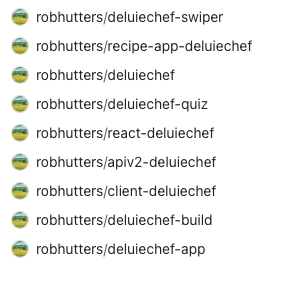
Version 1: Swipe interface written in plain JavaScript for recipes drawn from a personal database (apiv2-deluiechef). The NodeJS server would pull data from a MongoDB database. The host was Linode server running Debian. Users could save favourites and retrieve ingredient lists on demand.
Version 1.1: User-generated recipe submission implemented but not published due to abuse risk.
Version 1.2: Smaller iterative improvements based on user feedback. The core proposition remained unchanged.
Version 2.0: Rewrote Swipe interface in ReactJS and made the switch to a Postgress Database. Moved the entire production service from a simple server on AWS to Supabase (Postgres backend) and Netlify (front-end host).
Her is a mock of an earlier design:
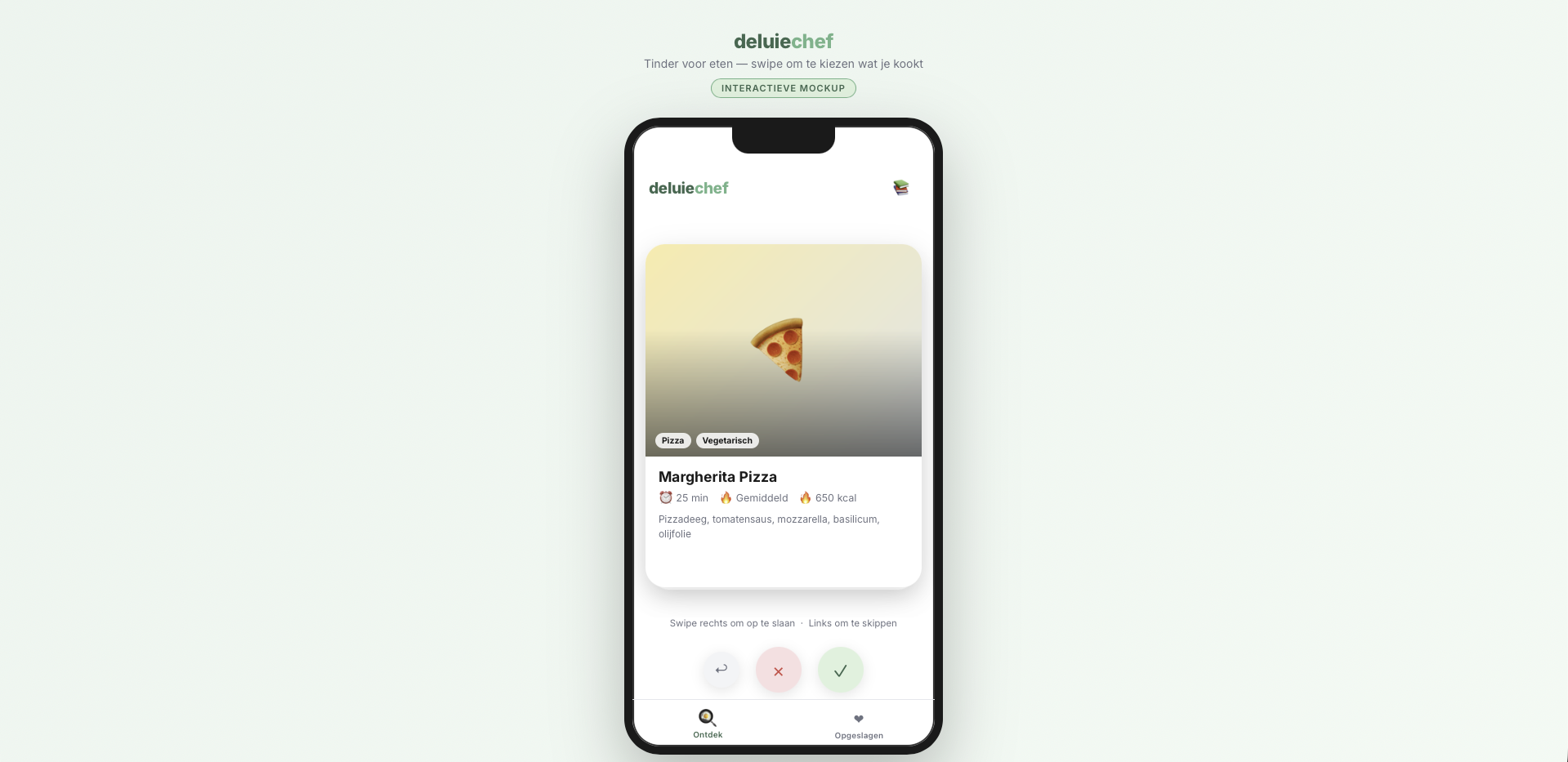
Version 2.1: Iterative improvements to fix mostly visual bugs.
Version 3.0: Rewrote interface again to be in plain JavaScript with the help of Claude AI. Backend remained unchanged.
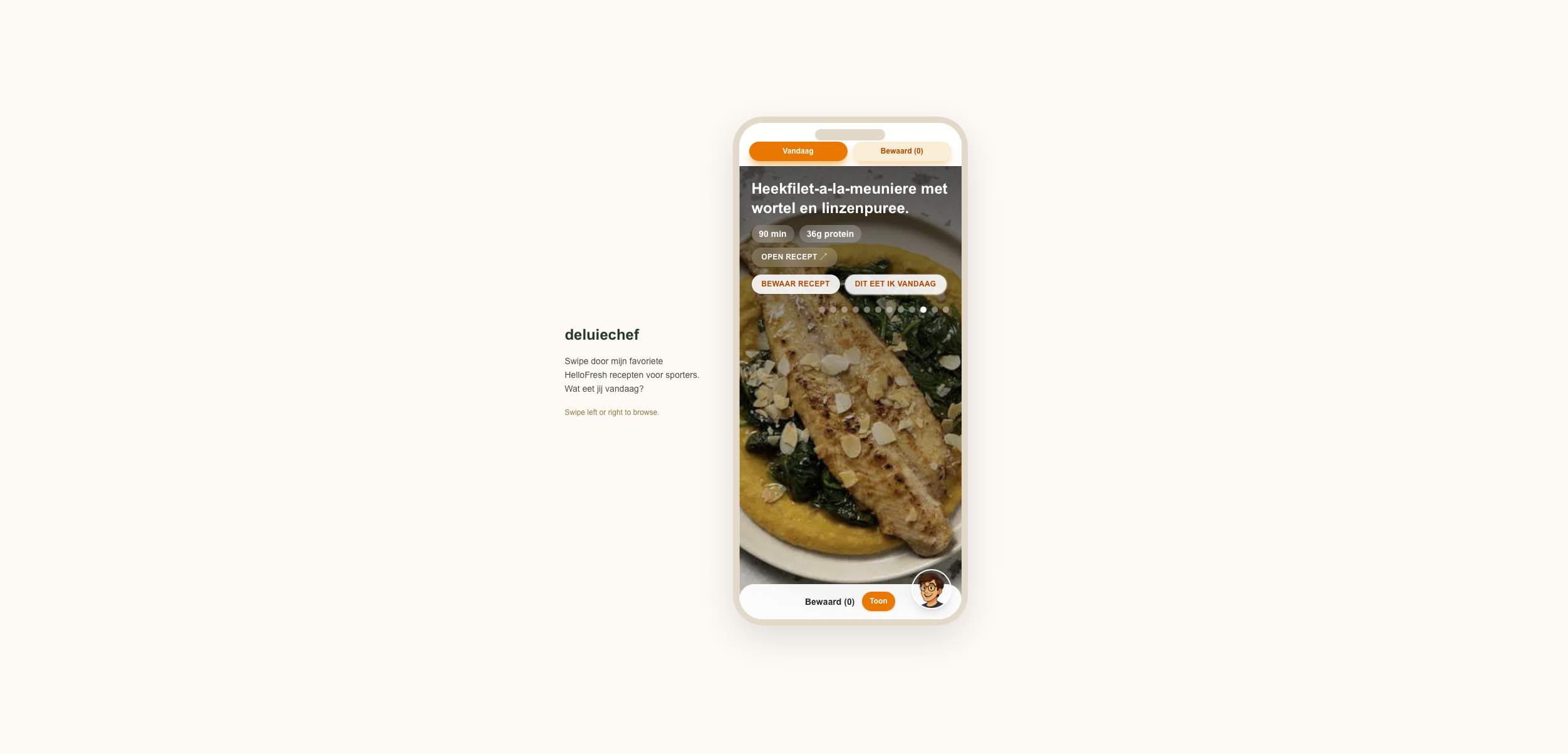
Version 3.1: Added a Shopify shop where people could order limited edition mugs.
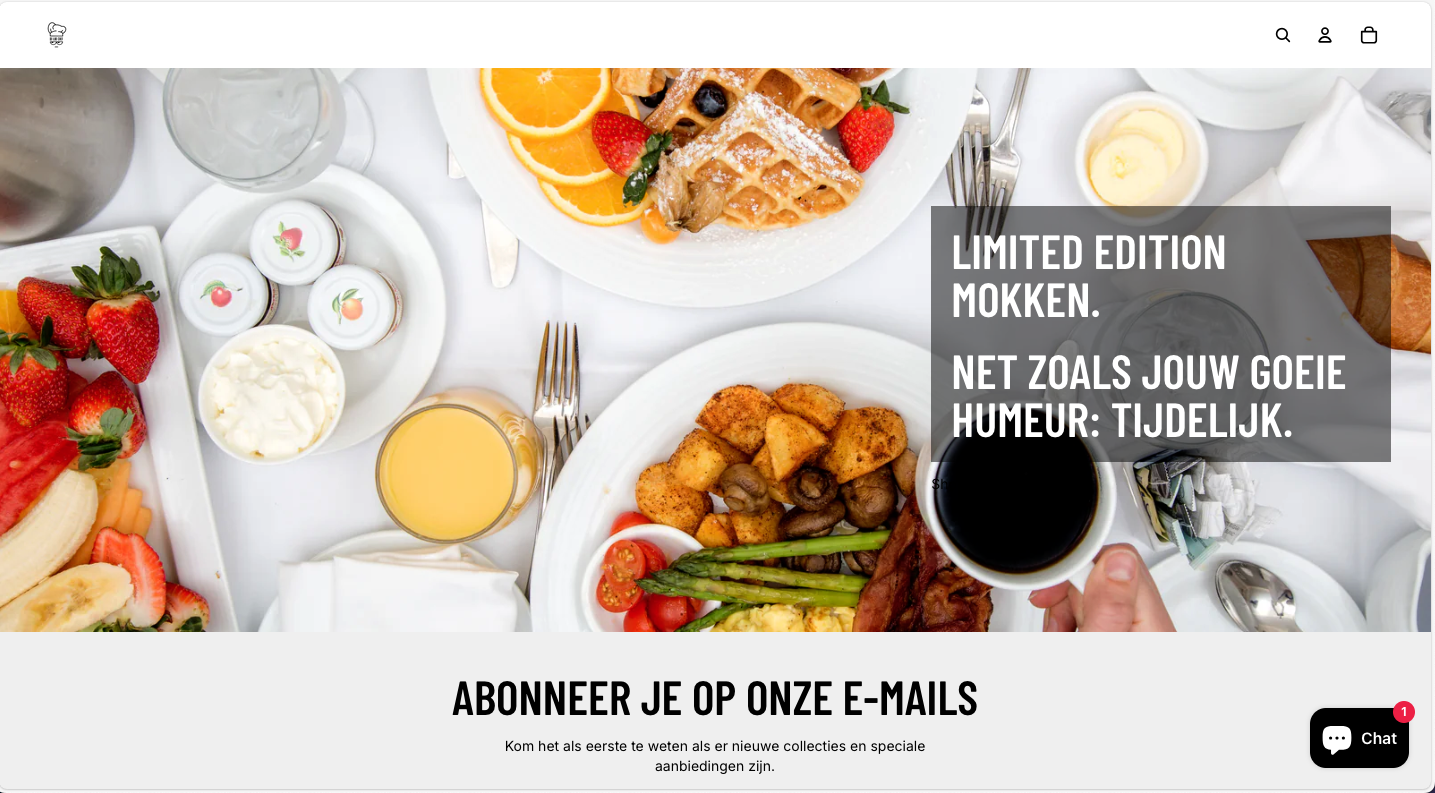
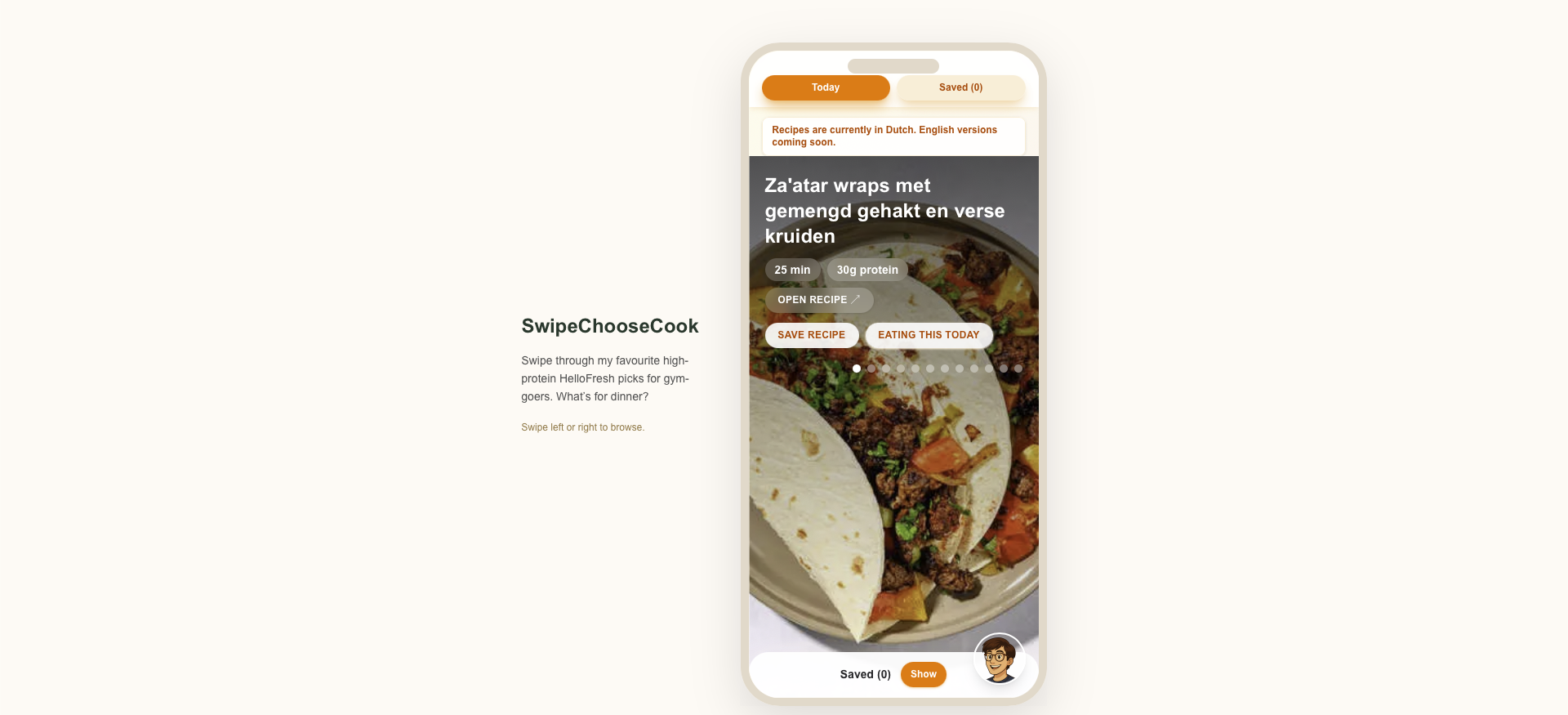
Version 4.0: Moved the app to a section of this blog for posterity's sake in simplified form. Here is what it looked like before the change:
Why I stopped
Competition: Picnic and HelloFresh have since built functionality that exceeds deluiechef.nl's core proposition. They offer swipe interfaces, shopping lists, week planning and an easy way to get your dinners delivered. These are products backed by teams, capital, and distribution networks that a solo developer cannot compete with.
Distribution: The app was web-only. No iOS, no Android. Generating visibility without a marketing budget or team proved structurally impossible. The assumption that a good product sells itself turned out to be wrong. Peak traffic was around 100 visitors per month. That's respectable for pure word of mouth, but nowhere near enough.
Scale: The complexity of the app exceeded what was realistically maintainable solo. Attempts to attract investment stalled on the requirement for a business partner and an exhausting selection process.
Reflection
deluiechef.nl taught me that distribution is the hardest part of building a product, not the building itself. User feedback was consistently positive. But feedback is not traction.
The idea was valid. The team, timing, and resources were not.